


Expert Picks: Trees With Non Invasive Roots for Small Yards
When selecting trees for your landscape or property, it’s crucial to consider their mature size and root spread to avoid future complications. Did you know that invasive tree roots can cause significant damage to foundations, sidewalks, driveways, and underground utilities? This can lead to costly repairs and maintenance. Choosing trees with non invasive roots can prevent such issues while still providing the beauty and benefits of having trees on your property.
In urban and suburban settings where space is limited, opting for trees with safe root systems is particularly valuable. This article will guide you through understanding root systems, the benefits of non-invasive options, and recommend specific tree varieties that are suitable for your landscape.
Key Takeaways
- Selecting trees with non-invasive root systems is crucial for preventing property damage.
- Invasive tree roots can cause significant damage to infrastructure and utilities.
- Non-invasive root trees are ideal for urban and suburban landscapes.
- Proper tree selection can provide beauty and benefits without root-related issues.
Understanding the Problem with Invasive Root Systems

A mechanical excavator pulling up invasive roots near a roadside—highlighting the damage these root systems can cause.
Understanding the risks associated with invasive root systems is crucial for making informed decisions about tree planting. Trees with aggressive root systems, such as Silver Maples, Willows, and Poplars, are notorious for sending out roots in search of water and nutrients, often causing destruction in their path. This growth can lead to cracked sidewalks and damaged landscape surfaces.
Common Trees with Invasive Roots to Avoid
Some trees are best avoided due to their invasive root systems. These include Silver Maple, American Elm, Willows, Hybrid Poplars, Southern Magnolia, and Bradford Pear. These trees are known for their aggressive roots that can lead to costly repairs and maintenance.
While these trees might be suitable for large rural properties, they can be problematic in typical residential yards due to their potential for damage.
Benefits of Choosing Trees with Non-Invasive Roots
By selecting trees with non-invasive roots, you can avoid the potential damage caused by aggressive root systems, ensuring the longevity of your home’s foundation and surrounding infrastructure.
Reduced Maintenance and Repair Costs
Opting for trees with non-invasive roots can lead to significant savings on maintenance and repair costs. With fewer concerns about root damage, you can focus on routine tree care without the added stress of potential property damage. This makes non-invasive root trees a practical choice for busy homeowners.
Factors to Consider When Selecting Trees with Non-Invasive Roots

Key factors to consider when choosing trees with non-invasive roots—climate, soil, and design goals all matter.
Climate and Hardiness Zones
Your local climate and hardiness zone play a significant role in determining which trees will thrive on your property. Selecting trees that are well-suited to your area’s temperature and precipitation patterns is vital for their survival and health.
Available Space and Soil Conditions
Assessing the available space and soil conditions on your property is also essential. Trees need adequate room to grow, and their root systems must be compatible with your soil type to prevent future problems.
Aesthetic Preferences and Landscaping Goals
Your aesthetic preferences and landscaping goals should also guide your tree selection. Consider factors like seasonal interest, flower production, and fall color to create a visually appealing landscape that meets your needs. For instance, if you want to enhance your garden’s beauty, choose trees with vibrant flowers or striking foliage.
Ornamental Trees With Non-Invasive Root Systems

Stunning ornamental trees like Japanese Maple, Dogwood, and Crabapple offer beauty without damaging root systems.
When it comes to selecting trees for your property, opting for ornamental trees with non-invasive root systems is a wise decision. These trees offer beauty and elegance without the risk of damaging your home’s foundation or infrastructure.
Japanese Maple (Acer palmatum)
The Japanese Maple is a popular choice for its stunning fall colors and compact growth. It thrives in well-drained soil and partial shade, making it ideal for smaller landscapes.
Kousa Dogwood (Cornus kousa)
Kousa Dogwood is known for its showy spring flowers and disease resistance. Its non-invasive roots make it suitable for planting near structures, and it prefers well-drained soil.
Adams Crabapple (Malus ‘Adams’)
The Adams Crabapple is a vibrant, burgundy-colored tree with a compact size and beautiful spring flowers. It has a shallow root system, making it an excellent choice for residential landscapes with limited space. This tree prefers moist soil and is resistant to common diseases, making it a low-maintenance option for homeowners who want to enjoy the beauty of trees without the hassle.
Flowering Trees That Won’t Damage Your Property

Choose flowering trees like Crape Myrtle, Eastern Redbud, and Witch Hazel for vibrant beauty without invasive roots.
Beautiful flowering trees are a great addition to any garden, and choosing ones with small roots can prevent future problems. These trees not only add beauty but also do so without causing harm to your property’s infrastructure.
Crape Myrtle (Lagerstroemia indica)
Crape Myrtle is known for its vibrant summer flowers and is a popular choice for warm climates. It has a small root system, making it suitable for planting near structures without the risk of damage. It thrives in well-drained soil and full sun.
Eastern Redbud (Cercis canadensis)
Eastern Redbud is a stunning tree with pink or purple flowers that bloom in spring. Its non-invasive roots make it an excellent choice for gardens with limited space. It’s adaptable to various soil types and requires minimal maintenance.
Cornelian Cherry Dogwood (Cornus mas)
The Cornelian Cherry Dogwood is a slow-growing tree or large shrub that produces clusters of yellow flowers in early spring. Its small root system allows for planting near structures, and it produces edible cherry-like fruits in summer. It prefers well-drained soil and partial shade to full sun.
Shade Trees with Small Root Systems
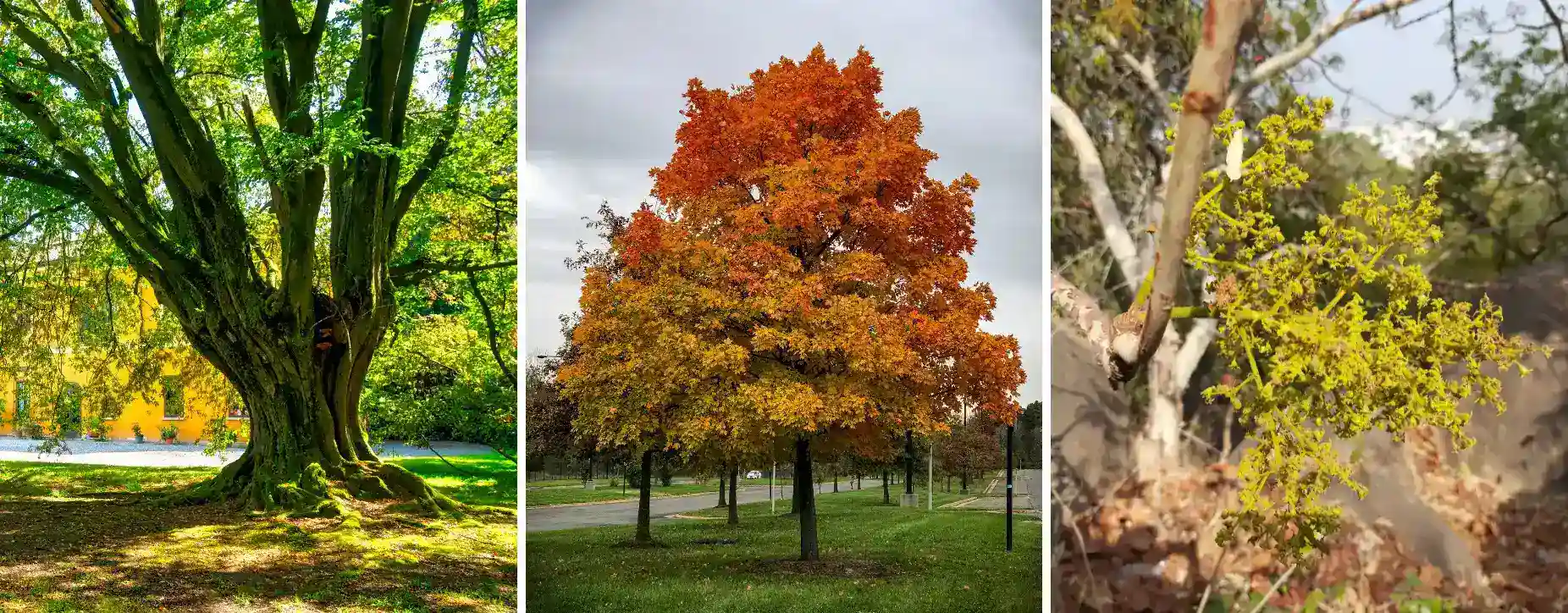
Consider trees like Amur Maple, Hedge Maple, and California Buckeye for reliable shade without damaging nearby structures.
For homeowners seeking shade without the risk of property damage, trees with small root systems are ideal. These trees provide the benefits of shade while minimizing the risk of invasive roots damaging your home’s foundation or underground infrastructure.
American Hornbeam (Carpinus caroliniana)
The American Hornbeam is a deciduous tree known for its non-invasive root system and ability to thrive in shade. It’s a great choice for woodland gardens or areas with limited space. With its smooth, gray bark and vibrant fall colors, it’s a beautiful addition to any landscape.
Trident Maple (Acer buergerianum)
The Trident Maple is a drought-tolerant tree that features a non-invasive root system, making it perfect for urban landscapes. Its distinctive three-lobed leaves turn brilliant shades of red and orange in the fall, adding seasonal interest to your yard.
Chinese Pistache (Pistacia chinensis)
The Chinese Pistache is a mid-size deciduous tree with pinnate leaves that turn vibrant shades of red and orange in the fall. It’s known for its non-invasive root system and exceptional drought tolerance once established. This tree is well-suited for urban environments, offering shade without compromising infrastructure.
Proper Planting and Maintenance Tips for Non-Invasive Root Trees

Learn essential planting and care tips to help your non-invasive root trees thrive—from site selection to pruning.
To ensure the longevity and health of your non-invasive root trees, proper planting and maintenance are crucial. This involves understanding the ideal conditions and techniques for planting, as well as ongoing care practices.
Ideal Planting Locations and Techniques
When planting non-invasive root trees, choose a location that provides adequate space for growth and consider the soil conditions. Proper planting techniques, such as digging a hole that is two to three times as wide as the root ball and watering thoroughly, can significantly impact the tree’s establishment.
Watering and Fertilization Practices
Effective watering and fertilization practices are vital for the health of your trees. Water your trees regularly during their first year, and consider fertilizing annually to promote healthy growth. However, avoid over-fertilizing, as this can cause more harm than good.
Pruning and Long-term Care
Pruning is a critical maintenance task that helps maintain the tree’s structure and promotes healthy growth. Prune your trees during their dormant season, using clean and sharp tools. Additionally, practices like mulching around the tree can help retain moisture and suppress weeds. For complex maintenance tasks, consider hiring professional pruning services to ensure the job is done correctly.
Creating a Beautiful and Safe Landscape with the Right Trees

Choosing trees with non-invasive roots helps create a safer, more beautiful landscape that protects your property long-term.
Creating a beautiful and safe landscape starts with choosing trees with non-invasive roots. By doing so, you can enjoy a lush environment without worrying about property damage. The right tree choice enhances your landscape’s beauty and maintains its integrity.
Consider factors like climate, available space, and soil conditions when selecting trees. Our recommended varieties offer excellent options for creating functional landscapes. With proper selection, planting, and maintenance, you can enjoy the benefits of trees without root-related issues. Invest in the right trees now to prevent costly problems and enhance your property’s value and environmental benefits.
Ready to choose the right trees for your property? Contact Legacy Tree Service today at (503) 290-9482 or reach out online for expert guidance on safe, non-invasive tree solutions tailored to your landscape.
Trees With Non Invasive Roots: Frequently Asked Questions
1. What are some examples of trees that have non-invasive root systems?
Some examples of trees with non-invasive root systems include the Japanese Maple, Crape Myrtle, and Adams Crabapple. These trees are great options for homeowners who want to add beauty to their landscape without worrying about damage to their property.
2. How do I choose the right tree for my climate and hardiness zone?
When selecting a tree, consider the specific climate and hardiness zone you live in. Choose trees that are well-suited to your local conditions to ensure they thrive and don’t become a problem. Research the tree’s soil and watering needs to ensure they’re compatible with your landscape.
3. Can I still have a beautiful landscape with shade trees that have small root systems?
Yes, you can still have a beautiful landscape with shade trees that have small root systems. Consider trees like the American Hornbeam or Trident Maple, which provide excellent shade without the risk of invasive roots. These trees can be a great addition to your landscape, providing foliage and beauty for years to come.
4. What are some common problems associated with invasive tree roots?
Invasive tree roots can cause a range of problems, including damage to home foundations, infrastructure, and gardens. They can also lead to costly repairs and maintenance. By choosing trees with non-invasive root systems, you can avoid these problems and enjoy a beautiful, low-maintenance landscape.
5. How can I ensure I’m planting my tree in the right location?
To ensure you’re planting your tree in the right location, consider factors like available space, soil conditions, and aesthetic preferences. Choose a location that provides enough room for the tree to grow and thrive, and that complements your overall landscape design.